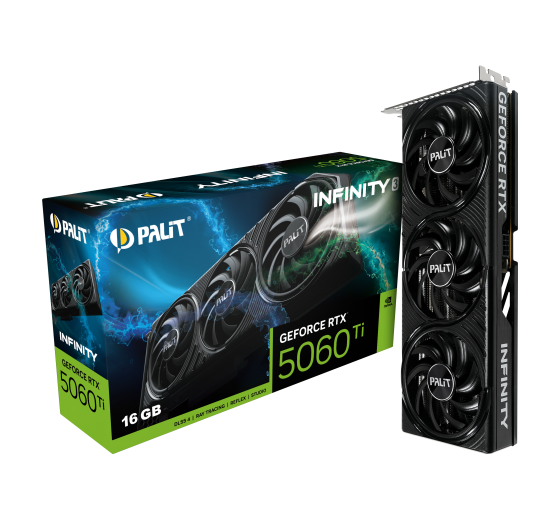
Palit is rolling out its full RTX 5060 Ti lineup, and the interesting part isn't the GPU. It's how little separates the cheapest card in the stack from the priciest one on paper. All three variants run the same NVIDIA Blackwell silicon with DLSS 4.5, Reflex 2 and Frame Warp. What changes is cooling, styling and how much VRAM you're willing to pay for.
That's a shift worth noting. A few generations ago, budget and mid-range cards often shipped with cut-down feature sets or delayed driver support for the newest tech. Here, an 8GB Dual card gets the exact same neural rendering stack as whatever Palit eventually ships at the top of its RTX 50 range. The differentiation has moved entirely to the physical build.
Three Cards, Three Jobs
The Dual series is the barebones option: twin 95mm fans, 0dB silent idle and a single 8-pin power connector. Palit is pitching it specifically at esports setups and internet cafes, which tracks. Competitive titles like Valorant or CS2 don't need 16GB of VRAM to hit high framerates, and cafe operators care more about density and reliability than headroom.
The White series is the same card in a different outfit: factory overclock, all-white shroud, matching backplate, subtle RGB. It comes in both 8GB and 16GB configurations, aimed at builders who want a clean aesthetic without stepping up to a flagship price.
The Infinity 3 is the one that actually asks for more money. Triple-fan cooling and composite heat pipes that Palit says improve heat dissipation by up to 32% over standard designs, built for small form factor cases where thermal headroom is tighter. That's the card for someone building a compact rig who still wants sustained boost clocks under load.
What's Missing
Palit's release doesn't include pricing or a firm PH availability date, just that the lineup is "available now through authorized distributors and global retail channels." Given how close this launches to Palit's own RTX 3060 Infinity 2 OC refresh from last month, it's worth watching whether the 5060 Ti undercuts or sits well above it once local retailers list actual numbers.
The real decision point for buyers isn't Dual versus White versus Infinity 3. It's whether 8GB is enough VRAM for the games you actually play. Esports titles will run fine on 8GB for years. Anything leaning into ray tracing or higher-resolution textures will hit that ceiling faster than the marketing copy suggests.