Microsoft just designed a version of Windows specifically for developers, and the first company to ship it is AMD, not one of Microsoft's usual launch partners. That order of operations is the actual news in Project Zenith, more than the feature list itself.
Announced on the Windows Blog, Project Zenith is a "ready-to-code" configuration of Windows 11 aimed at developer-class hardware, specifically machines with 64GB or more of unified memory and 250GB/s or faster memory bandwidth. Microsoft says it will debut on AMD's Ryzen AI Max+ platform, with other OEM and silicon partners following "in the coming months." For a company that typically keeps Windows announcements neutral across Intel, AMD, and Qualcomm silicon, leading with a single AMD chip family is a deliberate choice, not an oversight.
The pitch is fewer cloud tokens, not just a cleaner desktop
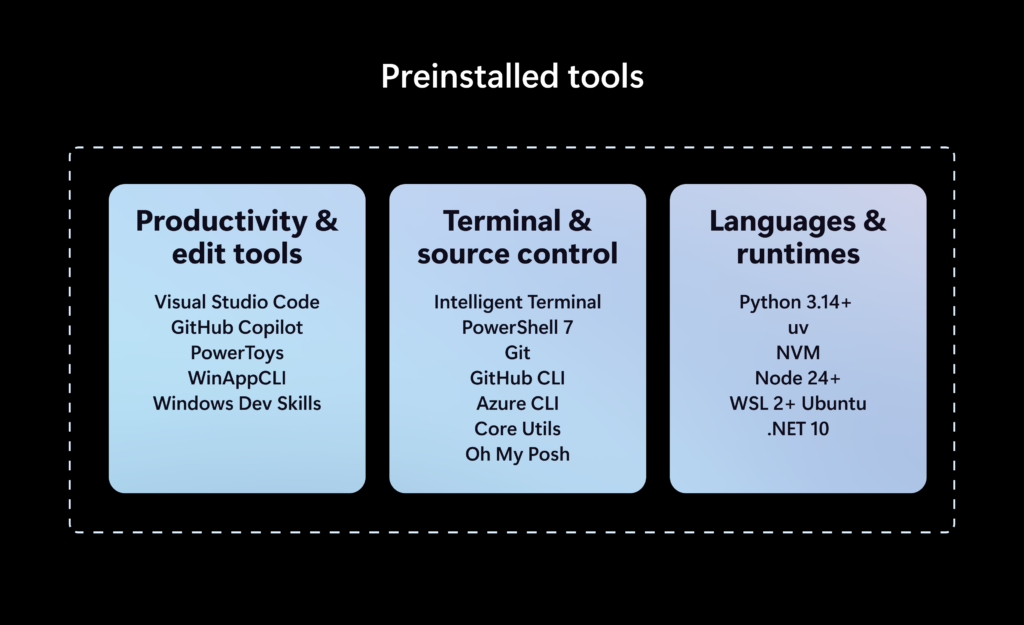
The visible part of Project Zenith is mundane in a good way. Devices ship with Windows Terminal and Visual Studio Code pinned to the taskbar, file extensions and hidden files visible in File Explorer by default, long-path support turned on, and the usual Windows clutter (account notification nags, Start menu tips, sync provider prompts) switched off out of the box. None of that requires new hardware. It is Microsoft finally defaulting Windows into the configuration most developers manually set up on day one anyway.
The actual reason for the memory and bandwidth requirements is buried further down: Microsoft is positioning these machines to run 30-billion-parameter-plus AI models locally, "unmetered," which is Microsoft's way of saying you stop paying per-token cloud fees for routine AI coding assistance. That only works if the local hardware can actually hold and run a model that large, which is why this is tied to specific memory thresholds instead of being a software update anyone can install.
Built on work Microsoft already shipped
Project Zenith is not a new platform underneath. It leans on infrastructure Microsoft has been rolling out through 2026: Windows Subsystem for Linux containers announced at Build 2026, Microsoft Execution Containers for sandboxing AI agents, and the broader push toward what Microsoft calls a secure platform for agentic Windows applications. Zenith is packaging that work into a specific hardware tier rather than introducing new capability on its own.
Microsoft frames this as "just the beginning," with more OEM and silicon partners expected to ship Zenith-configured devices later. Whether that actually happens on a reasonable timeline is worth watching. AMD getting first access to a Microsoft-branded developer experience is a notable win for a company that has spent the past year positioning Ryzen AI hardware as the affordable alternative to Copilot+ PC requirements built around Qualcomm and Intel chips. Whether Intel and Qualcomm devices get equally capable Zenith configurations, or a scaled-down version months later, will say more about how exclusive this partnership really is than anything in the announcement itself.