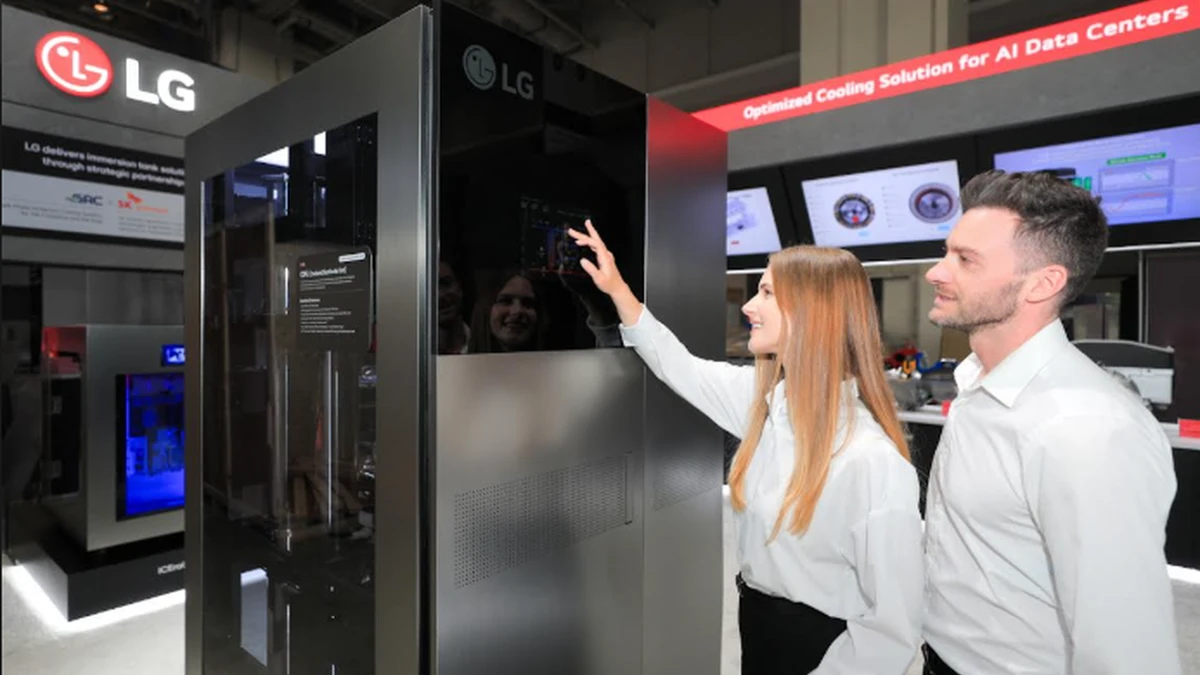
LG Electronics just picked up NVIDIA's AI Factory validation for a 600kW Coolant Distribution Unit (CDU), a specific certification for a company most people still associate with TVs, refrigerators and washing machines. It's also a clear signal of where LG thinks its next growth market is.
A CDU manages liquid coolant flow between a data center's chiller system and the racks of GPUs actually doing AI compute work, and NVIDIA's AI Factory validation exists because liquid cooling has become mandatory rather than optional at the power densities modern AI training racks pull. LG says its 600kW unit is now one of a select group of companies globally cleared to meet that standard, part of what it's branding as an end-to-end "Chip-to-Chiller" cooling portfolio.
The pivot makes more sense than it first sounds
LG already builds commercial HVAC and industrial cooling systems through its existing business lines, so moving that expertise toward AI data centers is a smaller leap for LG than it would be for a company starting from zero. NVIDIA's AI Factory ecosystem exists specifically to validate partners like this, since the GPU maker would rather certify third-party infrastructure vendors than build cooling hardware itself.
LG says it plans to expand its NVIDIA-certified CDU lineup, which reads as a statement of intent more than a roadmap. No specific timeline or additional models were named in the announcement. The company is positioning this as evidence it can compete for infrastructure contracts as AI data center buildouts keep accelerating globally, a market where cooling has quietly become one of the harder engineering problems as chip power draw keeps climbing faster than conventional air cooling can handle.
Enterprise plumbing, not a product anyone here will buy
For a consumer electronics brand, this is enterprise infrastructure, not a product readers will ever shop for. But it's worth tracking as part of a broader pattern: household-name hardware brands increasingly want a piece of the AI infrastructure buildout, and cooling has turned out to be one of the more approachable entry points for companies that already know how to move heat around at scale.