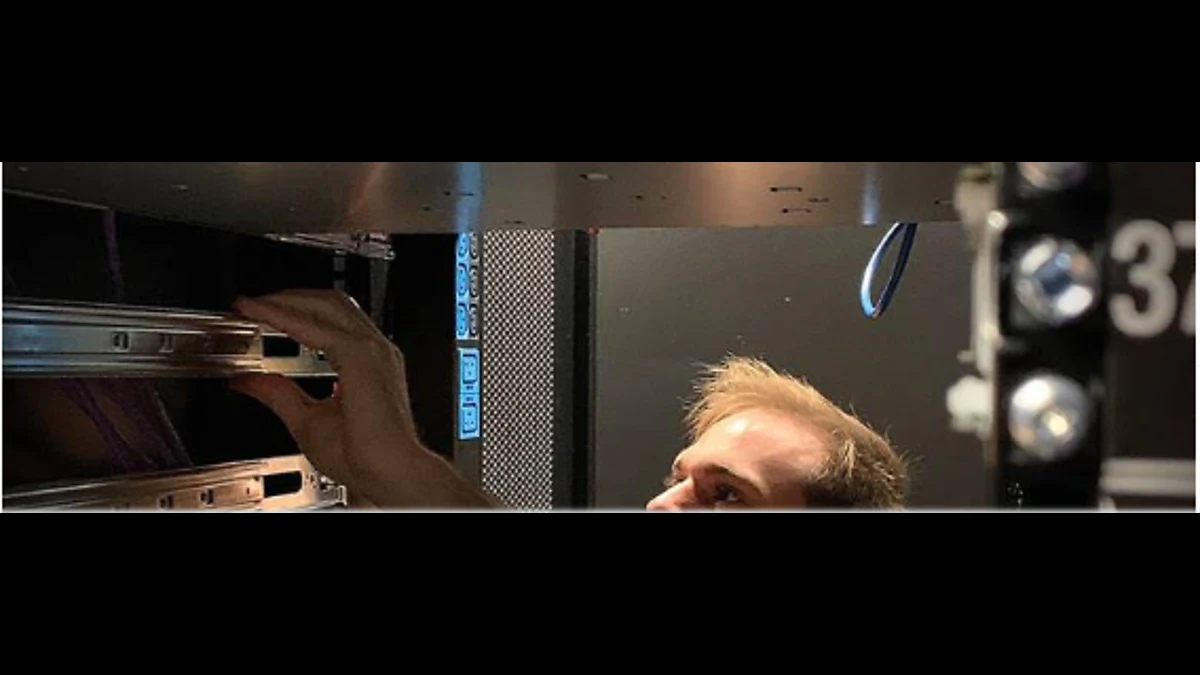
Shockbyte is expanding into Dallas, one of the most competitive data center markets in the US for space and power, and the AMD server overhaul it just finished is the reason it can afford to try. The hosting company behind more than 65 game servers, including the official dedicated server partnerships for Rust and Discord, rebuilt its global infrastructure around AMD processors and consolidated over 2,000 machines into fewer than a thousand while lifting single-thread performance more than 50 percent, according to its own benchmarks.
From leased Intel boxes to owned AMD data centers
"For most of the time the company has been operating, we leased bare metal servers from third parties," said Liam Charles, Shockbyte's Director of IT. Around 2023, as socket AM5 Ryzen chips launched, Shockbyte started building its own data centers instead, after years of Ryzen 3000 and 5000 processors running reliably without reboots. Working with hardware partner DiGiCOR, the company built its first deployment in Melbourne on Supermicro's MicroCloud platform, a high-density 3U rackmount housing eight nodes on AMD Ryzen 7000 series chips, before moving through the Ryzen 7700, AMD's EPYC 4004 series, and most recently the EPYC 9555P, a 64-core chip supporting 1.1TB of RAM per system.
The numbers behind the consolidation
Shockbyte's legacy builds averaged around 2,750 on a PassMark single-thread benchmark. The new AMD builds average 4,200 globally, roughly a 53 percent jump, and at least 40 percent over the Intel Xeon E chips Shockbyte used before, a gain Charles said is especially noticeable in Minecraft hosting. Memory density improved too, from a 128GB per-system cap for years to 256GB now, with EPYC 9000 series systems supporting up to 1.5TB. Power efficiency dropped from 0.93W per GB of memory to 0.65W, a 30 percent reduction for the same capacity.
Why the consolidation matters more than the specs
Game launches spike hard for a couple of weeks, then settle to roughly 10 percent of that initial player base, Charles said, which means hosting providers need to scale fast for launch day and then consolidate onto fewer machines without disrupting players still online. "Being able to consolidate into two racks what would have required six to eight racks allows us to make the most out of what is available," Charles said, and that density is exactly what makes a market like Dallas, where data center space and power allocation are harder to secure than most US markets, workable for expansion in the first place.
The gaming industry now generates more revenue than film and music combined, and roughly two-thirds of gamers play online, which is what makes server infrastructure a genuine bottleneck rather than a background detail: laggy hosting kills the experience no matter how good the game is, whether that's a Minecraft world or a Rust server holding thousands of players.