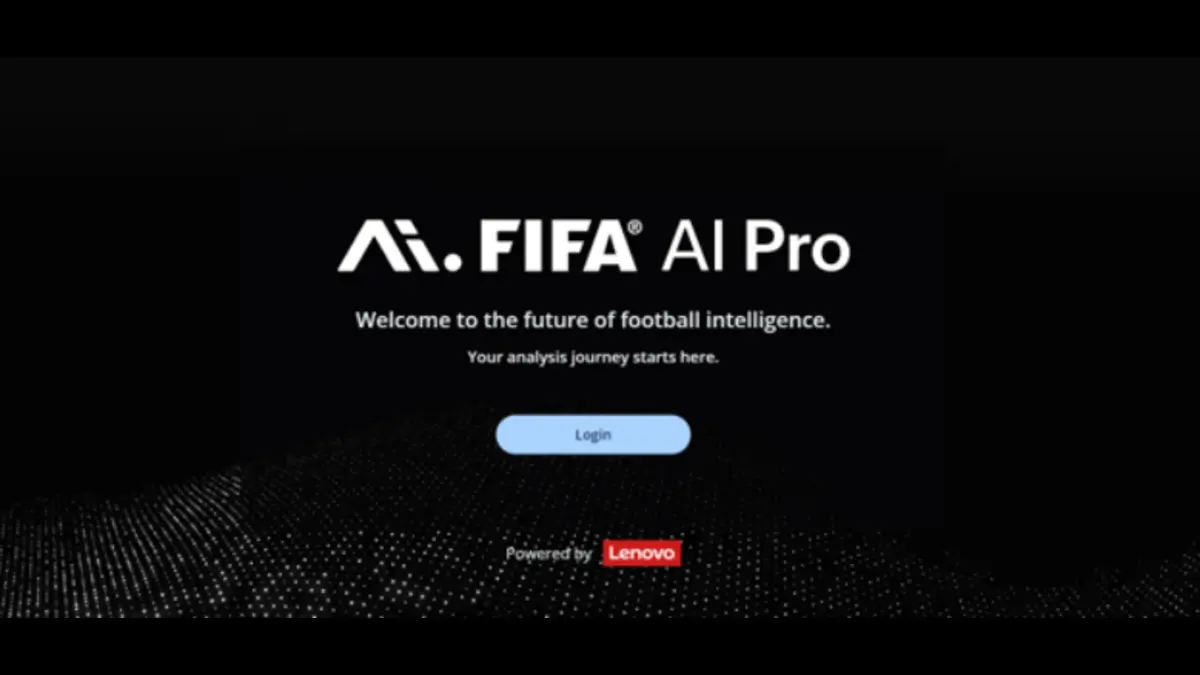
Lenovo and FIFA say every one of the 48 teams that competed at the 2026 World Cup used the same AI analytics platform to prepare, from traditional football powers to national teams that have never fielded a full-time video analyst. That's the specific claim worth sitting with. Not that Lenovo built a capable tool, but that adoption reportedly reached all 48 federations, not just the handful that can normally afford elite scouting departments.
The platform is called FIFA AI Pro. According to the companies, it processes millions of data points and more than 2,000 performance metrics per match, then turns that into reports, graphs, animations and other analysis within minutes. The pitch to national federations is straightforward: instead of hiring a full analytics staff or waiting days for a breakdown, coaching teams get match insight fast enough to actually use before the next training session.
Built on Lenovo's enterprise AI stack
FIFA AI Pro runs on Lenovo's AI Factory infrastructure and its xIQ agent platform, described as a "Knowledge Super Agent" that coordinates several AI agents at once to process football data. In practice that means the tool isn't one model doing everything. It's a set of coordinated agents each handling a slice of the analysis, from raw tracking data to the finished report a coach reads.
Arsène Wenger, FIFA's Chief of Global Football Development, framed the platform's value in terms of time. He said it lets analysts spend less time gathering information and more time on tactical decisions, since data collection and processing that used to take staff hours now happens automatically.
What "all 48 teams" actually confirms
The headline number is real and checkable in a way vague marketing claims usually aren't. Either every federation used the platform or it didn't, and Lenovo and FIFA are on record saying it did. That's a stronger claim than "top teams" or "several federations," and it's the part of this release that matters more than the AI specs.
What the release doesn't say is how heavily each team relied on it, or whether equal access to the same data pipeline closed any competitive gap on the pitch. A federation with one analyst reading FIFA AI Pro reports still has fewer people to act on those insights than a federation with a full performance department. Universal access to a tool isn't the same as universal ability to use it well, and the release is silent on results, depth of use, or which teams leaned on it most.
Still, giving every federation the same baseline dataset and analysis tools, instead of licensing it selectively to the biggest football markets, is a real departure from how sports analytics vendors have typically operated. It's also a marquee showcase for Lenovo's enterprise AI ambitions, tying its AI Factory and xIQ platform to the most-watched tournament in sports. Whether that access changes outcomes on the field is a separate question, and one the tournament itself will answer better than any press release.