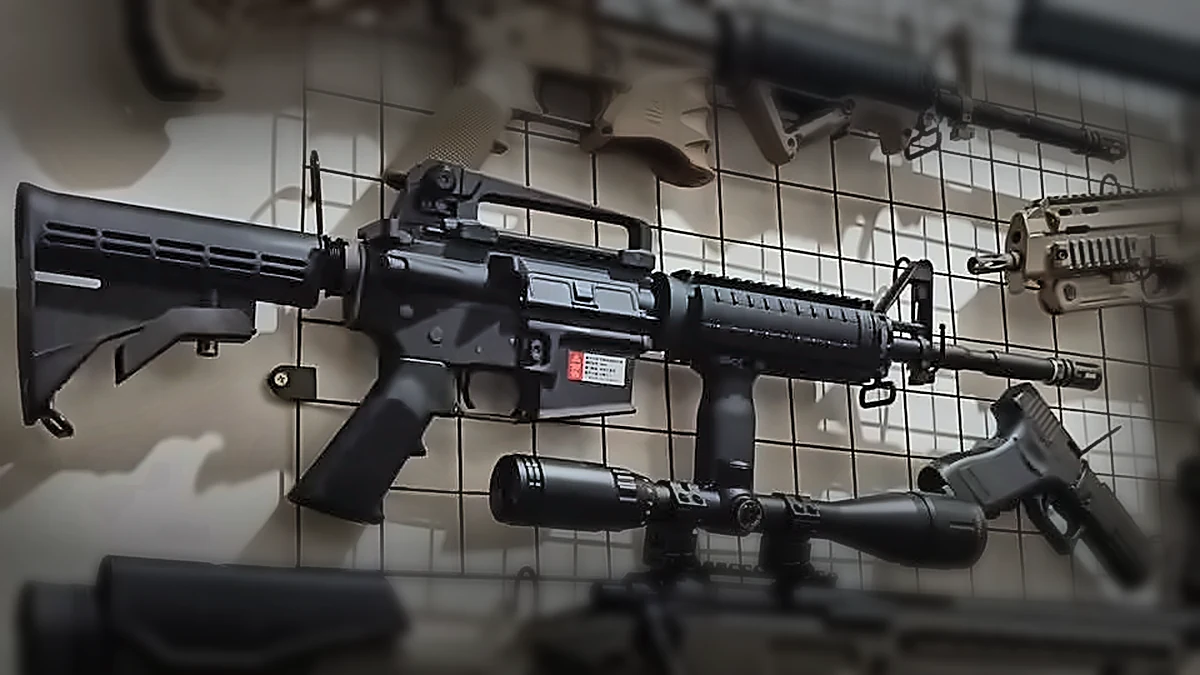
The WE M4 RIS GBBR V3 is the budget gas blowback rifle I would recommend without a long list of warnings attached. It is affordable, it performs well straight out of the box and a few cheap tweaks take it a lot further. That combination is rarer in GBBRs than it should be.
This one is mine, the updated V3 with the steel fire control group, now wearing custom furniture I mostly printed myself. I play at Alpadi, a mountainous jungle field where rain, mud and river crossings are part of a normal game day, so this rifle has not lived a gentle life. Here is how it has held up, what I changed and what I would tell anyone about to buy one.
Who This Rifle Is For
WE-Tech built its name on gas blowback rifles that cost less than the premium brands while still delivering the thing people buy GBBRs for: a bolt that slams back on every shot. The M4 RIS is the entry point to that lineup, and it suits two kinds of players. The first wants a recoiling AR without paying top-tier money. The second wants a base gun to tinker with and plans to spend the savings on parts.
If you want an airsoft gun you charge, load and forget, an AEG is still the easier life. A GBBR asks you to manage gas, magazines and temperature. The WE just makes that bargain about as cheap as it gets.
V3 or V3.1: Ask Before You Pay
The detail that matters most is which V3 you are actually getting. The updated run, which some sellers call V3.1, comes with a steel trigger, disconnector and hammer plus a bolt stop you can lock open by hand. Earlier V3 units used softer pot metal parts in the trigger group and cannot lock the bolt open manually.
Think of the trigger group as the hinges on a door you open thousands of times. You want them in steel. If you end up with an earlier V3, a complete V3.1 trigger box exists as an upgrade path, but buying the right version from the start saves you the trouble. Ask the shop directly, because the "V3" label alone does not tell you which internals are in the box.
What It Costs Locally
I bought mine at Neknek's Airsoft Shop for PHP 22,000. That price included an extra magazine and a spare BCG, and I stacked it with the shop's buy 5 take 5 magazine promo. Vincent's Hobby Shop lists the same rifle at PHP 18,250 without the extras.
The PHP 3,750 gap looks big until you price out what it covers. GBBR magazines add up fast, and a spare BCG is insurance for the part that does the most work in the gun. If you need mags anyway, the bundle can be the better deal. If you already own a stack of WE mags, the lower price at Vincent's makes more sense.
Out of the Box, Then One Small Change
Stock, the M4 performs well for the money and delivers the kick that makes GBBRs fun in the first place. The weak spot is the hop up nub, the small piece of rubber that presses down on the bucking to put backspin on the BB. WE ships it as a hard, solid cylinder, and it was the first thing holding this gun back.
My first change was a Unicorn nub. That one swap tightened my groupings and improved accuracy right away. If you only do one thing to a new WE M4, make it this.
The Barrel Swap That Made It Too Hot
Next I wanted to try a different hop bucking. I did not want to spend much, so I picked up a secondhand stock VFC inner barrel and paired it with a 4UAD Friction GBB bucking.
Two things are worth knowing before you try the same. First, WE cuts its inner barrel and hop rubber to its own internal pattern, even though both look like standard GBB parts from the outside. Think of the WE barrel and WE rubber as a lock and key cut for each other: a standard part only works if you replace both halves together.
Second, the barrel has to seat properly in the hop chamber. Each brand cuts a small notch into its barrels so they line up with its own hop chambers. VFC's notch is made for VFC hop chambers and WE uses a different layout, so the VFC barrel was not a clean drop-in and I had to modify it to fit. Aftermarket barrels skip this problem. They are made to fit several brands' hop chambers, so they seat in the WE without trouble.
Then I chronoed it. After the swap, the gun was shooting 2.3 to 2.4 joules, north of 500 FPS. That was not what I was after, and it was well over what my field allows.
The fix was in the nozzle of the BCG. The rocket valve inside it decides how much gas each shot gets, a bit like a faucet. I added a grub screw to restrict it, and the gun settled at 445 to 450 FPS, which works out to roughly 1.85 joules on .20g BBs. That puts it right at the edge of Alpadi's 450 FPS cap for standard rifles.
The lesson is simple. Any barrel or bucking change on this platform can move your power output, sometimes by a lot. Chrono it before you take it to a game.
Custom Furniture, Mostly Off My Own Printer
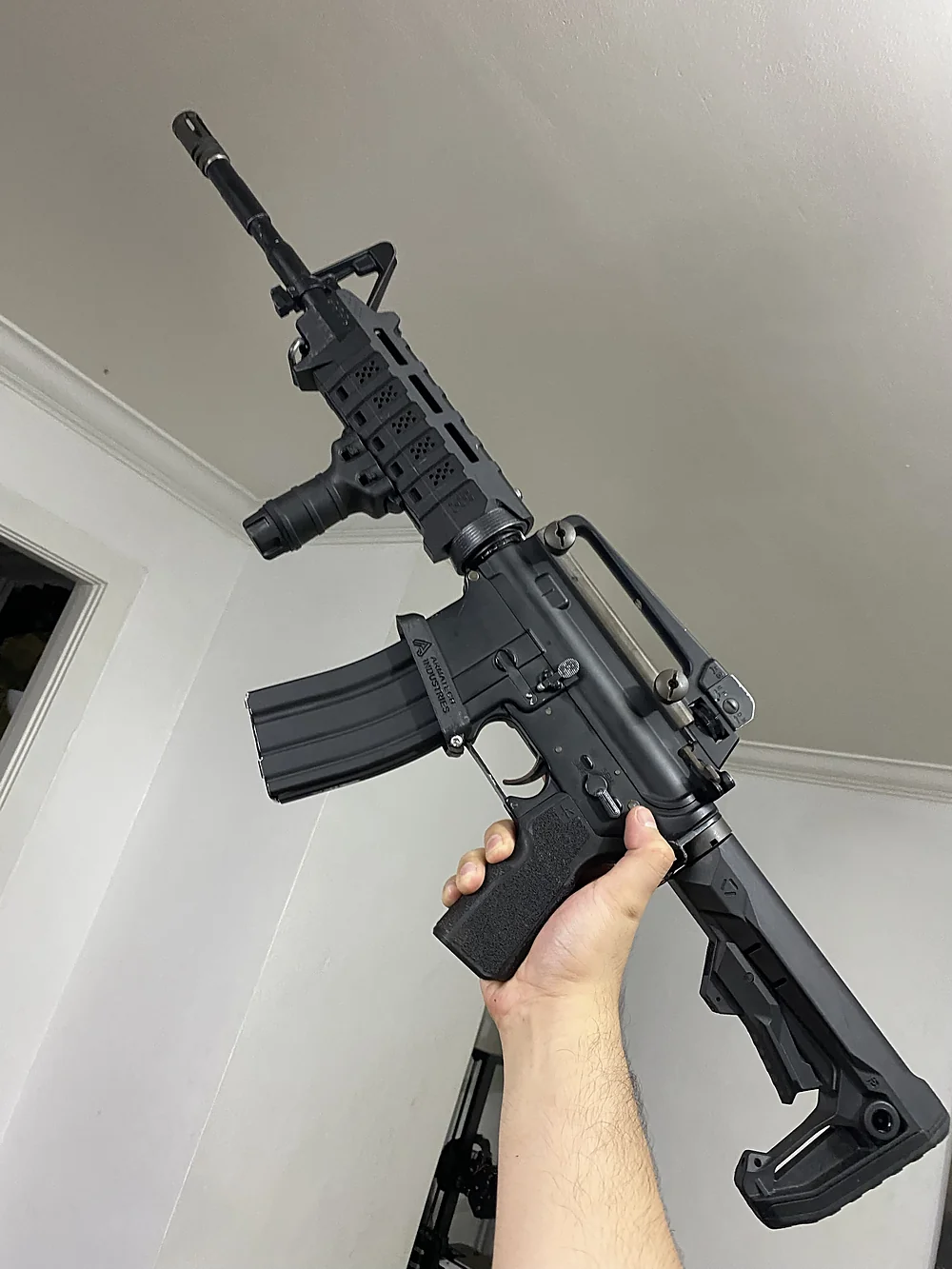
The rest of my changes were about comfort and fit, and most of them came off my own 3D printer. The handguard is a printed design inspired by the Strike Industries Viper handguard, with the same angular, vented look. I also printed the pistol grip and the foregrip.
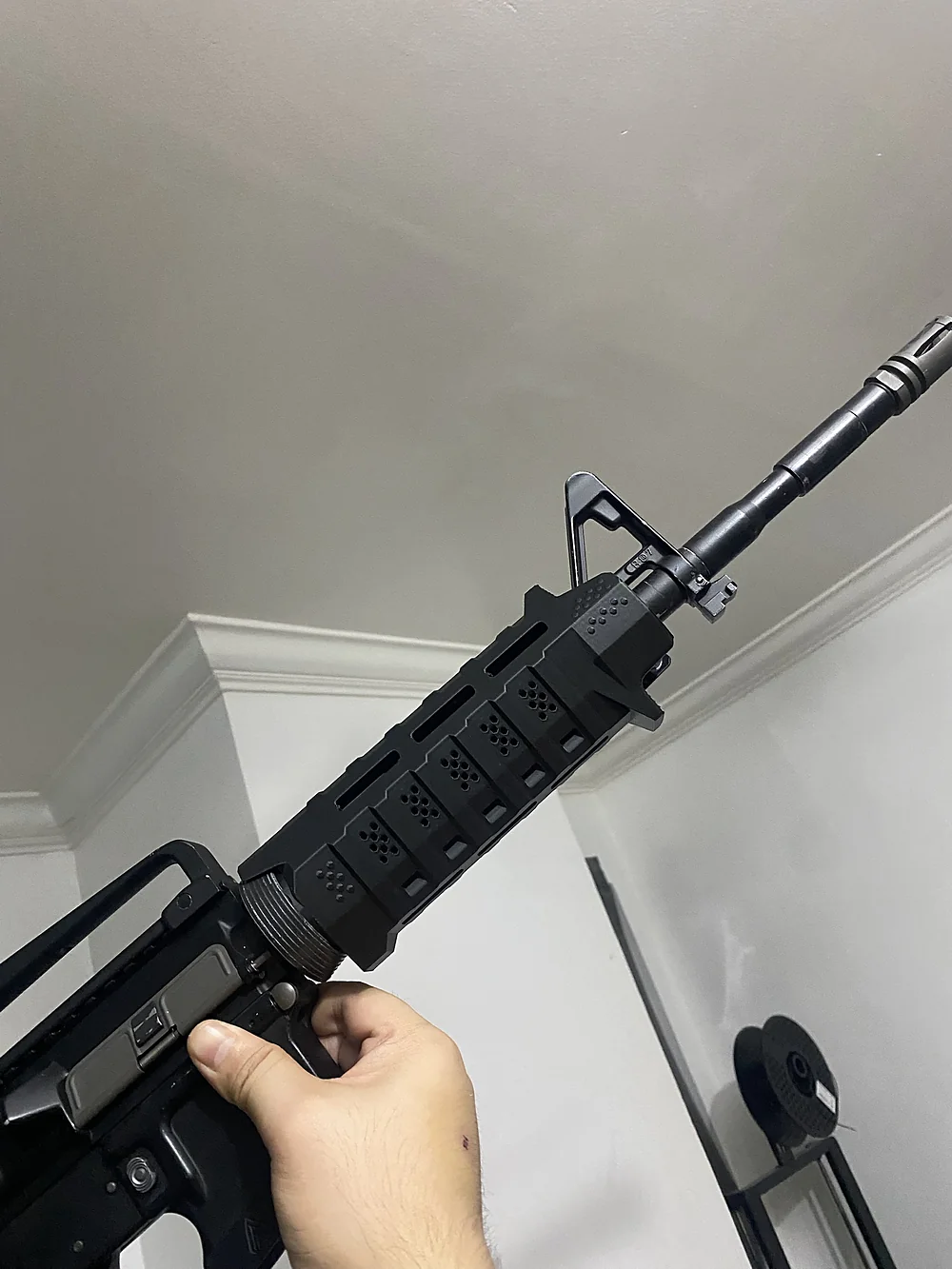
The one piece I bought is the stock, a mil-spec Strike Industries Mod2. The WE's buffer tube is mil-spec sized, so a mil-spec stock fits it the same way it would on a real AR. That is the practical upside of a platform built to real steel dimensions: you can shop the same accessory aisle as real AR owners.
None of this changes how the rifle shoots. It changes how it sits in my hands and against my shoulder, and printing lets me tune that for the cost of filament. If you own a printer, furniture is the easiest place to make a WE M4 your own.
A Field That Punishes Gear
Alpadi is where this rifle earned my trust. Rolling mountain terrain, rain, mud and river crossings wear gear down fast. Through all of it, the M4 kept running, and its performance actually got better as the changes settled in. Durability has been good enough for a field that exposes weak gear quickly.

Why It Works as a Platform
The M4 RIS makes the most sense when you treat it as a starting point. It follows the AR layout and real steel sizing in the right places, so it plugs into a large parts market. My Strike Industries stock is the proof on my own rifle. Most of its weak spots are cheap, well understood fixes rather than design flaws.
Heat is the other thing to plan for. Gas pressure climbs with temperature, so a GBBR in Philippine weather runs harder than it would in a cooler climate. My build has only needed hop, barrel and valve work so far. Spring and buffer tuning is the natural next step for anyone chasing better gas efficiency and a calmer rate of fire.
Calling it a budget GBBR also undersells it. The steel trigger group and the upgrade headroom are the real story. The catch is the naming: "V3" covers both the old and the updated internals, so buyers have to do the homework themselves.
Verdict
The WE M4 RIS GBBR V3 is one of the smartest ways into gas blowback ARs right now, as long as you get the updated version with the steel trigger group. It performs well stock, and it rewards small, cheap changes more than most rifles in its class.
My advice is to start with the hop up nub, chrono after any barrel work and shape the furniture around how you shoot, whether that means printing it or buying real steel parts. Buy it if you want real recoil without premium pricing, or a GBBR you can grow into. Skip it if you want an airsoft gun you never have to think about. An AEG will serve you better there.
Score
The WE M4 RIS GBBR V3 is one of the smartest ways into gas blowback ARs, as long as you buy the updated version with the steel trigger group. It performs well out of the box at PHP 18,250 to 22,000, and cheap fixes like a better hop up nub take it much further. Just chrono it after any barrel work.
- Steel trigger, disconnector and hammer in the updated V3
- Strong out of the box for PHP 18,250 to 22,000
- A nub swap alone tightens groupings
- Kept running through rain, mud and river crossings
- Mil-spec buffer tube takes real steel stocks like the SI Mod2
- Easy to customize with 3D-printed furniture
- Stock hop up nub holds it back
- Other brands' stock barrels, like VFC, may need modding to seat
- Barrel changes can push it past field FPS limits
- The "V3" label covers both old and updated internals