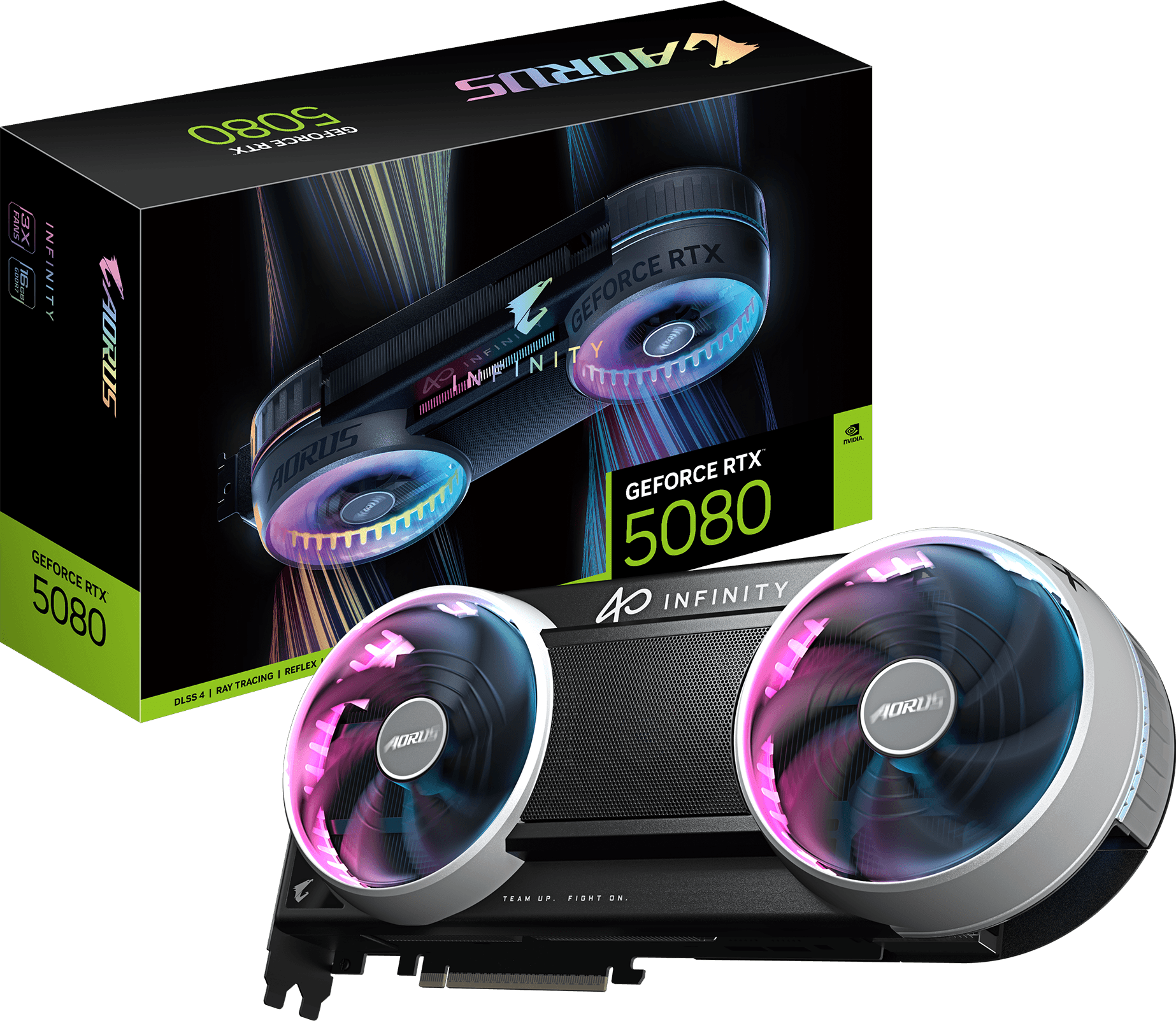
GIGABYTE just released a graphics card with wood grain on it, and the more you think about that decision the more interesting it gets. The AORUS GeForce RTX 5080 INFINITY WOOD 16G ships alongside the standard AORUS GeForce RTX 5080 INFINITY 16G, both available now, and the WOOD edition is the one actually worth talking about.
A GPU that's trying not to look like a GPU
GIGABYTE frames the wood-grain design as a direct response to gaming hardware's usual cold, rigid aesthetic, positioning the WOOD edition as something closer to a decorative object that can sit in a home workspace without demanding attention. Whether that lands depends entirely on personal taste, but it is genuinely different from anything else on the market right now, and a strange choice for a company that could have just shipped the standard aerospace turbine design and called it a day.
Both cards share that turbine-inspired visual framework, with RGB lighting built into the inner and outer rings of the engine-like fan structure, part of the INFINITY series GIGABYTE introduced for its 40th anniversary starting with the RTX 5090 INFINITY. The RTX 5080 tier sits at the sweet spot between the 5090's ceiling performance and its considerably higher price, running a factory boost clock of 2805 MHz against the reference 2617 MHz.
The actual engineering under the design language
WINDFORCE Hyperburst cooling is where GIGABYTE's real differentiation happens. A Double Flow Through design pushes cool air through the heatsink from both primary fans simultaneously rather than a typical push-pull setup, and combined with dual backplate cutouts, GIGABYTE claims 58% more airflow penetration than a traditional backplate and 28% over a single-cutout design. A concealed Overdrive fan, invisible during normal use, kicks in automatically under sustained high load based on a dedicated fan curve, adding a third active cooling source the card doesn't show off until it needs it.
The thermal stack backing all that: a large vapor chamber in direct GPU contact, composite copper heat pipes, high-performance composite metal grease on the GPU interface and server-grade thermal gel on VRAM and MOSFETs. Both cards also support GIGABYTE's Project Stealth cable management, routing the power connector internally with a magnetic backplate cover to hide the rest.
Two more INFINITY models are coming in July: the AORUS RTX 5070 Ti INFINITY 16G and AORUS RTX 5070 INFINITY 12G. Full specs for the RTX 5080 cards are at gigabyte.com.