

Fujisoft is developing an AI-powered physical security system designed for increasingly automated environments such as factories and warehouses, where traditional monitoring systems struggle to keep up with scale and complexity.
The company recently demonstrated a working unit built on AMD’s Embedded+ platform, signaling a shift toward edge-based AI security systems that prioritize real-time analysis and reduced false alerts.
Moving beyond motion detection
Conventional security systems rely heavily on motion detection, which often results in false positives triggered by lighting changes, weather conditions, or non-critical movement. Fujisoft’s approach replaces this with AI-driven image recognition, allowing the system to analyze visual data more accurately and distinguish between relevant and irrelevant events.
This is particularly important in industrial environments where multiple sensors and cameras generate continuous streams of data. As deployments scale, filtering meaningful signals from noise becomes a core challenge.
Fujisoft said its system is designed to improve detection accuracy while reducing unnecessary alerts, which can slow response times and increase operational overhead.
Embedded+ platform at the core
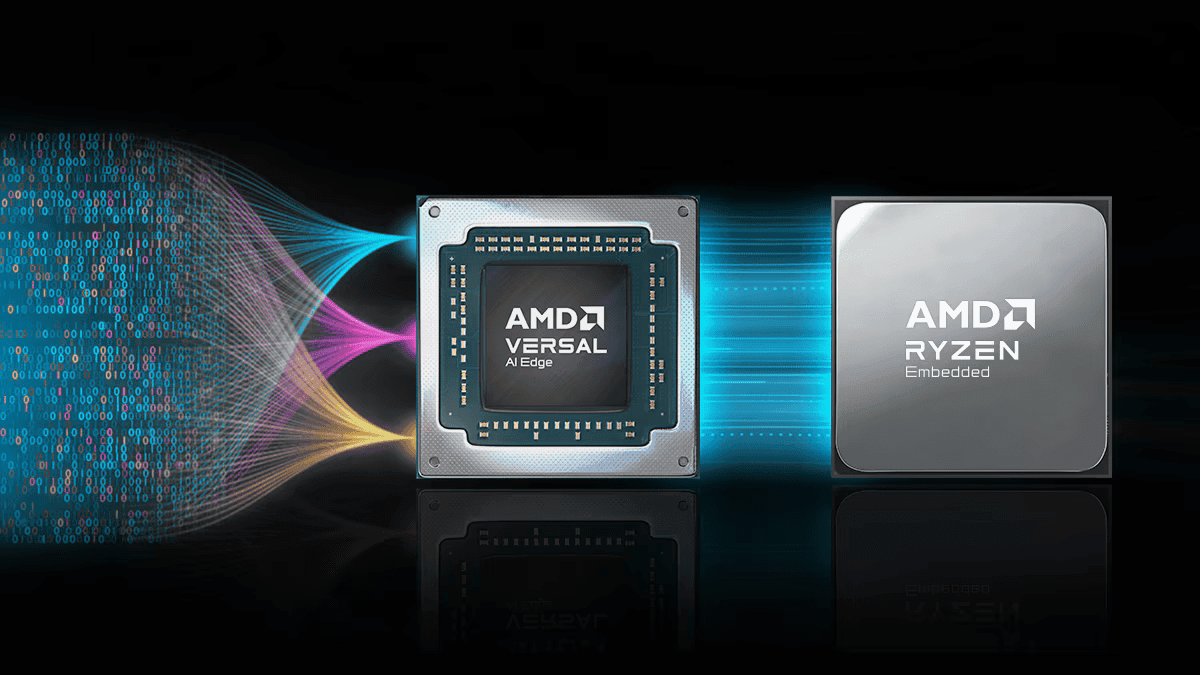
The system is built on AMD’s Embedded+ platform, which combines a Ryzen Embedded processor with a Versal adaptive system-on-chip in a single board design. This hybrid architecture merges traditional x86 processing with FPGA-based adaptability.
In practical terms, this allows the system to handle AI inference tasks while maintaining low latency across multiple sensor inputs. Programmable I/O also enables support for a wide range of devices without requiring extensive hardware redesign.
The integration is intended to reduce system complexity and shorten development cycles. By consolidating components into a single platform, vendors can deploy solutions faster and potentially lower overall costs.
Edge AI and real-time decision making
Fujisoft’s implementation reflects a broader trend toward edge AI, where data is processed locally instead of being sent to centralized servers. This approach reduces latency and bandwidth usage while improving privacy and reliability.
For security applications, real-time processing is critical. Delays in detection or analysis can undermine the effectiveness of surveillance systems, particularly in environments that require immediate response.
By combining AI inference with programmable hardware, the Embedded+ platform is positioned to handle these workloads without relying on constant cloud connectivity.
Development status and outlook
Fujisoft completed its initial demonstration unit in 2025 and is currently refining the system for wider deployment. The company said ongoing development is informed by customer feedback, particularly around challenges in managing complex, sensor-heavy environments.
From a market perspective, solutions like this sit at the intersection of industrial automation and AI infrastructure. As more facilities adopt autonomous systems, demand for intelligent security platforms that can operate at scale is expected to increase.
Fujisoft’s approach suggests that future security systems will rely less on simple detection and more on contextual understanding, driven by AI models running directly at the edge.